Last updated on
26 March 2026
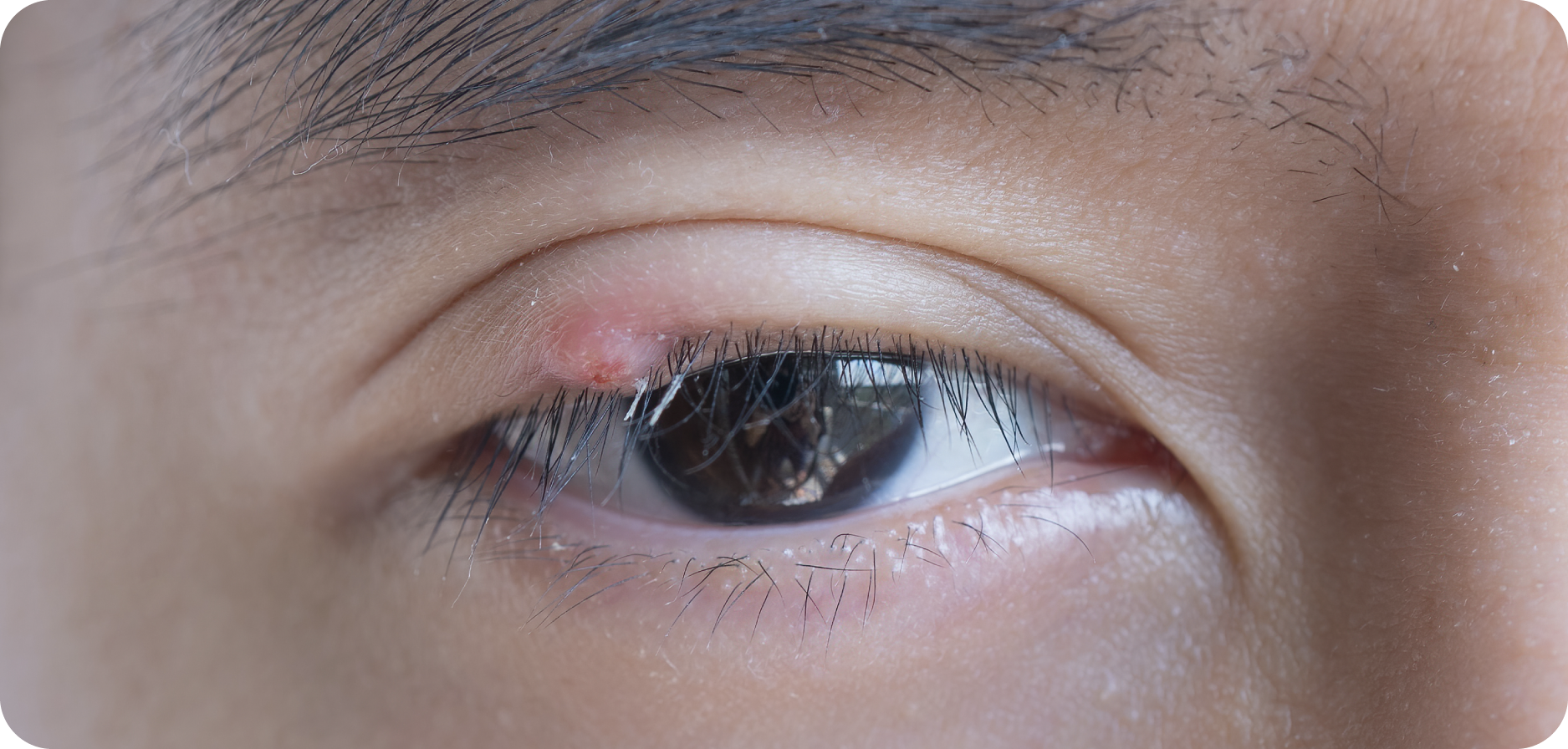
A chalazion is a localised swelling of the eyelid caused by obstruction and inflammation of the meibomian gland.
These glands produce the oily layer of the tear film. When blocked, their secretions can harden and form a firm nodule beneath the eyelid skin. This nodule is known as a chalazion.
Chalazia are painless in many cases, which may lead individuals to assume the lump is harmless and temporary. However, some chalazia may not resolve on their own, or may indicate an underlying issue.
Read on as we share more about the options for chalazion treatment, and when or why you may need them.
Meibomian glands line the upper and lower eyelids. They secrete lipids (fatty substances) that stabilise the tear film in our eyes.
When a meibomian gland becomes blocked, lipids can build up instead of flowing out as usual. This can trigger a chronic inflammatory response that may eventually lead to a chalazion.
Some factors may contribute to regular chalazion formation:
If any of the following happen with your chalazion, you may need to seek professional care:
Note that self-diagnosis is not recommended for chalazia. Among other things, some eyelid tumours can initially resemble chalazia and require different treatment.
Proper assessment ensures safe and accurate diagnosis, which can help you obtain appropriate treatment. Delayed treatment may lead to prolonged inflammation or structural eyelid changes.
You should not try to pop or remove a chalazion with extraction tools at home. That can worsen the chalazion or even cause an infection.
Instead, consider these treatments:
1. Warm Compress Therapy
Applying a warm compress to the bump for 10 to 15 minutes may help soften the contents of the gland. Chalazia blockages are often from hardened lipids or secretions, which can melt with heat.
Apply only clean and safe-temperature (not boiling hot) compresses to the area to avoid infection or burns. You can apply the warm compress 2 to 4 times a day.
2. Gentle Eyelid Massage
This is often performed after warm compresses have been applied to the chalazion. The technique should be taught correctly to avoid irritation and involves light, directed pressure.
The goal is to help move the built-up secretions and blockage towards the opening of the gland.
3. Topical or Oral Medications
Anti-inflammatory or antibiotic ointments may be prescribed if local irritation or bacterial involvement is suspected.
Oral medications may also be considered for patients with chronic meibomian gland dysfunction.
Note that medications can support symptom management in these cases, but may require additional treatments to remove chalazia that do appear or have already formed.
4. Incision and Curettage (I&C)
If the chalazion is large or persistent, this procedure may be necessary. A small incision is made on the inner surface of the eyelid (conjunctival side) to allow access into the blocked gland.
The hardened oils and inflammatory tissue are removed with a special instrument called a curette. After the procedure, patients can usually resume normal activities quickly.
5. Steroid Injection
This is an option if the chalazion is inflamed. A corticosteroid is injected directly into it, which can reduce the inflammation. This treatment can be used alone or in conjunction with the incision and drainage procedure to further reduce inflammation and scarring.
The reduction in swelling is not instant for this treatment, and it may take several weeks for the swelling to improve. This procedure is not suitable for all patients and will be decided upon evaluation by the doctor.
Some healthy lifestyle and hygiene habits may discourage repeated formation of chalazia:
Note that these habits support meibomian gland health, which can reduce your chances of forming a chalazion. They do not guarantee that a chalazion will never recur.
A chalazion is a common eyelid condition that often responds to appropriate care.
While conservative methods remain the first step in chalazion treatment, persistent or symptomatic cases may require professional evaluation.
ERS Suntec City provides comprehensive assessment and management of eyelid conditions.
Book a consultation with our ophthalmologists today to have your condition assessed and to discuss suitable care or treatment options.