Last updated on
27 November 2025
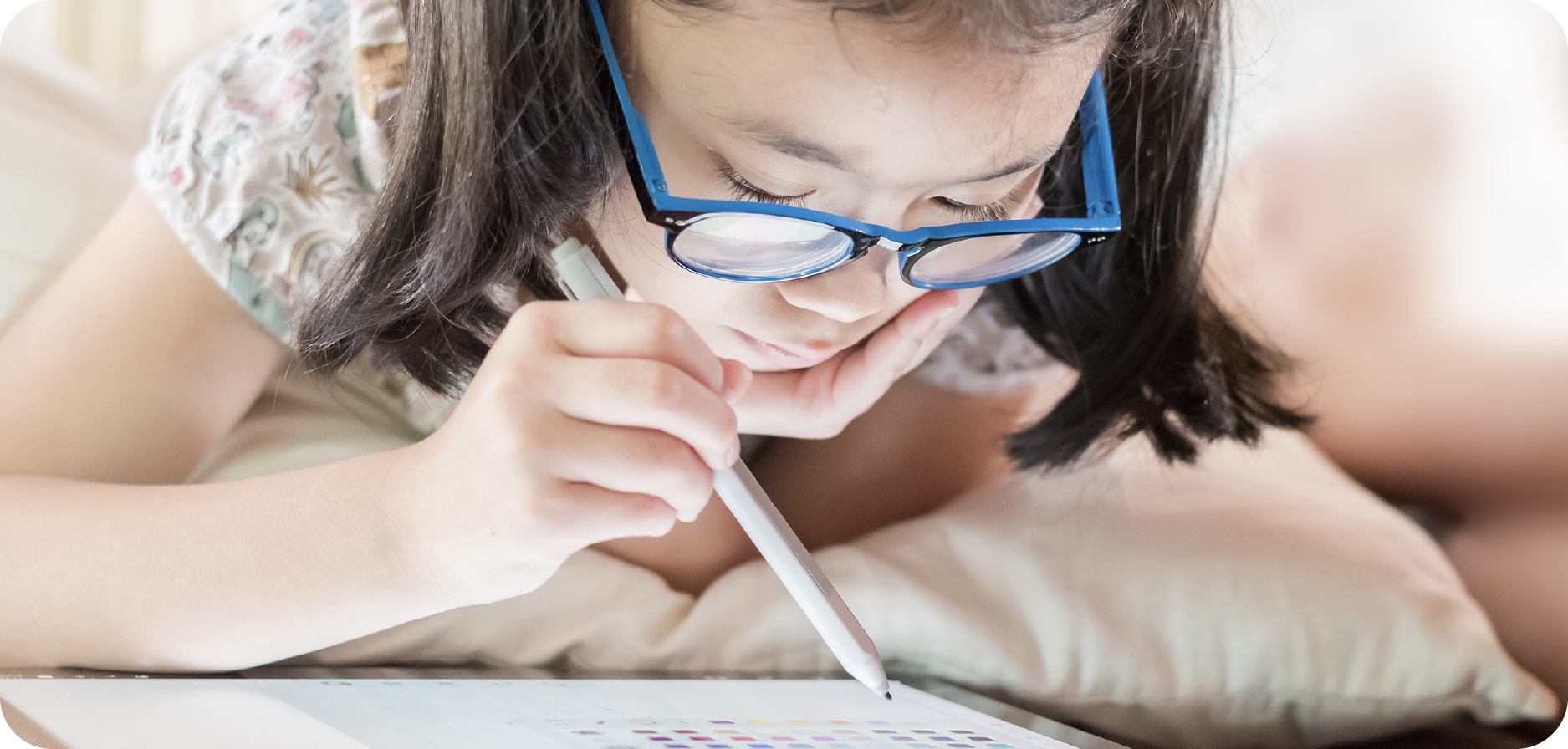
Childhood myopia is considered one of the most pressing vision concerns in Singapore, with prevalence rates among the highest in the world.
By the age of 12, more than half of Singaporean children are myopic. By 2024, up to 20% of them had the severe version, called high myopia. This was only about 10% in 2010.
The earlier myopia sets in, the faster it tends to progress into high myopia as well. This can increase the lifetime risk of other eye problems like glaucoma and macular degeneration.
As such, it is critical to diagnose and manage it early. This article can help parents by guiding them in recognising the early signs and symptoms of myopia, as well as the next steps to take. By being proactive, parents may be able to influence their child’s long-term eye health.
Childhood myopia or short-sightedness is a refractive error in children that causes light to focus in front of the retina instead of on it. This leads to blurry distance vision and may be caused by an abnormally long eyeball or unusually curved cornea.
Childhood myopia rates are significant in our nation. By age 12, 55% of our children already have it. Add another six years, and by age 18, 83% have it.
The key contributing factors may include a combination of genetic and environmental influences. For instance:
Because children’s eyes are still developing, slowing progression at a young age is crucial for reducing the risk of severe complications later in their lives.
Myopia control in children begins with detection and diagnosis. Unfortunately, parents may miss the early indicators of the condition because children do not complain about it.
Children may not even realise that they are seeing the world in an impaired way compared to others. Therefore, parents will need to be observant of their child’s behaviour or complaints.
Below are some of the possible signs and symptoms of myopia in children. Note that they are not certain indicators of the condition. Some of them can even overlap with normal childhood behaviour.
As such, a professional eye check-up is still the only way to get a definitive diagnosis.
If your child’s distance vision is blurry, this is the key indicator. Ask your child if they struggle to see the whiteboard clearly in school. You can also check if they struggle to read distant road signs.
Most children with myopia will squint and narrow their eyes when experiencing difficulty seeing distant objects.
Another common sign that your child’s distance vision is worsening is behavioural adjustment that privileges close-up work or vision.
If you find your child sitting very close to televisions or holding books and screens very close to the face, that could be a sign. Some may even go so far as to avoid sports or games that require clear distance vision.
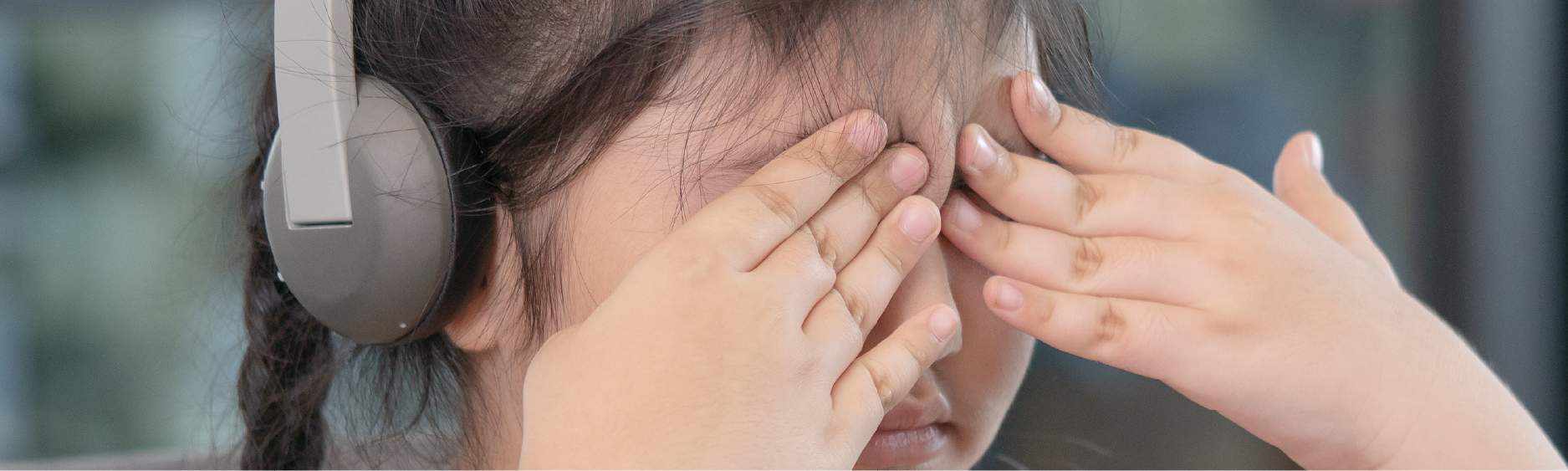
Some physical complaints may stem from vision problems. Frequent complaints of headaches after reading or spending time on screens are examples. Some children also report eye fatigue or rub their eyes excessively after such activities to try to relieve strain.
Sometimes, myopia manifests through a drop in children’s school performance. This is often because they now struggle to read instructions or content on whiteboards and presentations.
They may also appear less interested in participating in activities with peers, especially ones requiring distance vision.
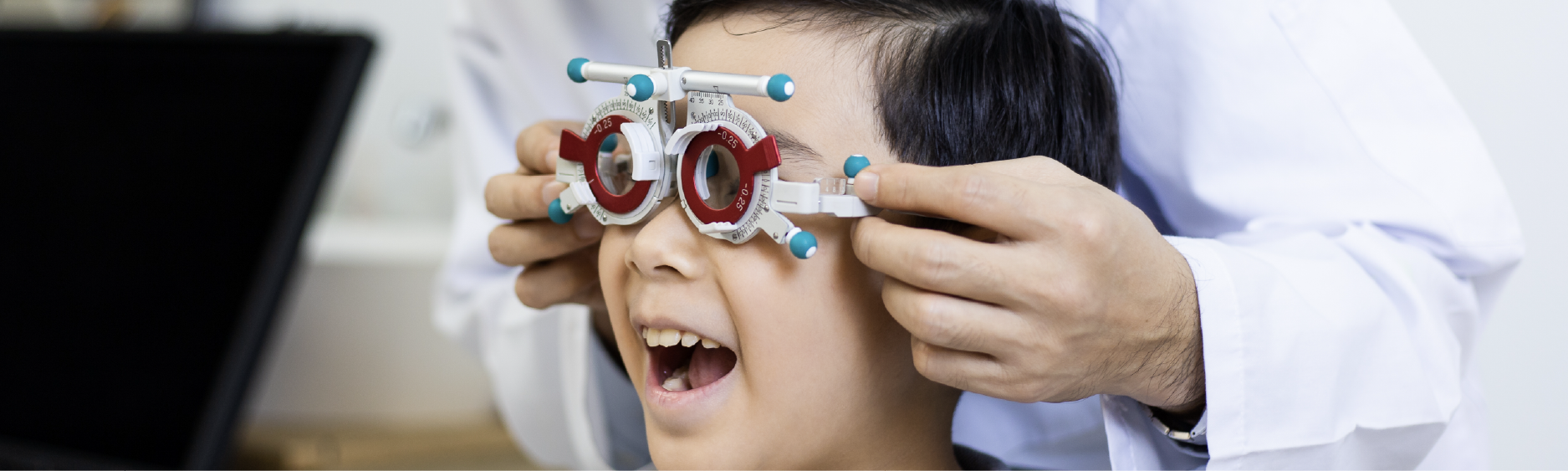
If you notice the signs of childhood myopia, the first step is always to schedule a comprehensive eye examination for your child. The Ministry of Health (MOH) even recommends that the first screening be done by age 4-6, with annual check-ups after.
At ERS Suntec City, eye specialists use refraction tests, axial length measurement, and retinal imaging to assess not only vision but also the risks of progression.
Once a diagnosis is made, you should feel free to ask questions of your child’s eye doctor. The better you understand the condition, the better you can support your child’s health.
Examples of questions parents often ask during our myopia consultations are below:
Each case must be treated individually. That being said, the following myopia management options are often recommended for children in Singapore.
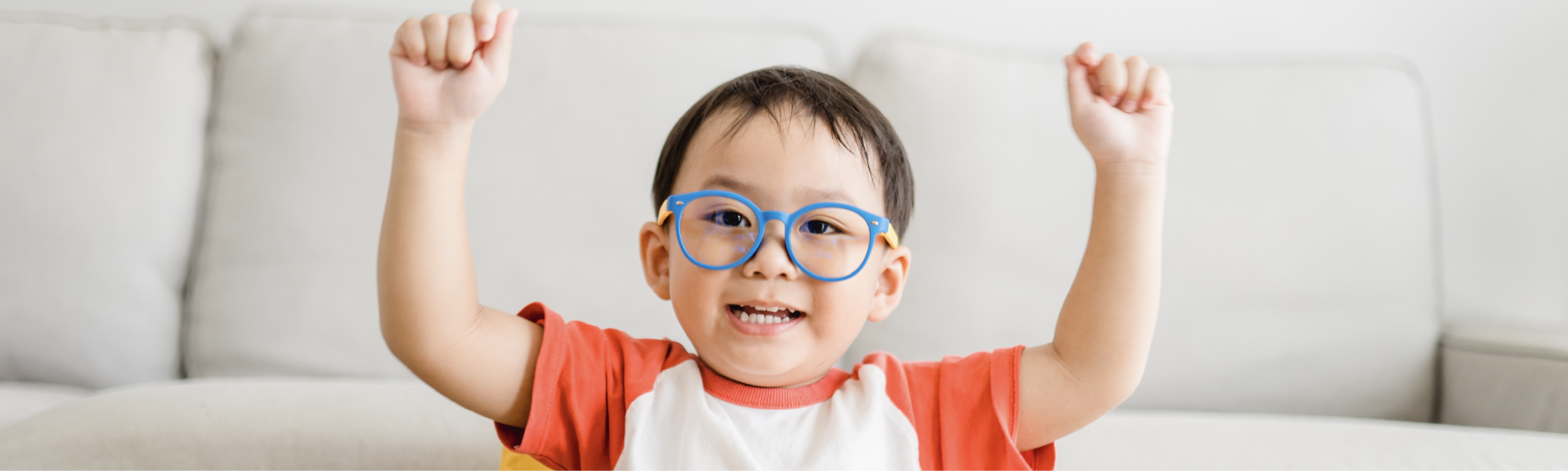
Myopia glasses are the first line of treatment for the condition. They are available both as standard lenses or specialised myopia control glasses to reduce progression.
Professional fitting is required for comfort and effectiveness.
These are generally suggested only for older children with parental supervision.
Ortho-K or orthokeratology lenses may be used overnight to reshape the cornea temporarily for clear daytime vision. Some studies even suggest they can slow myopia progression.
Specialised soft multifocal contact lenses are also available to reduce eye strain and slow eyeball elongation.
These are generally included in a myopia control plan. Two hours of outdoor play for exposure to natural light can help slow the progression of myopia, for instance.
Children may also be taught the 20-20-20 rule: every 20 minutes, they should look at something 20 feet away for at least 20 seconds.
Finally, limited screen time may help as well.
Tests such as Optical Coherence Tomography (OCT) and axial length measurement can help track changes in the condition. It may also warn doctors when there are early signs of complications that need to be addressed.
Childhood myopia is a progressive condition. Once it has begun, it cannot be reversed. This is why the focus is on managing its progression.
With timely intervention, parents may be able to reduce the risk of their children developing high myopia, which is the more severe form of the condition. This may also contribute to lower risk of developing complications.
Spotting the early signs of myopia is the first step to managing the disease. If you believe your child may be at risk or exhibiting some of the condition’s symptoms, schedule an appointment with an eye doctor today.
At ERS Suntec City, we can provide comprehensive eye health evaluations and consultation for children. Take the first step today and book an appointment now.