
Last updated on
22 December 2025
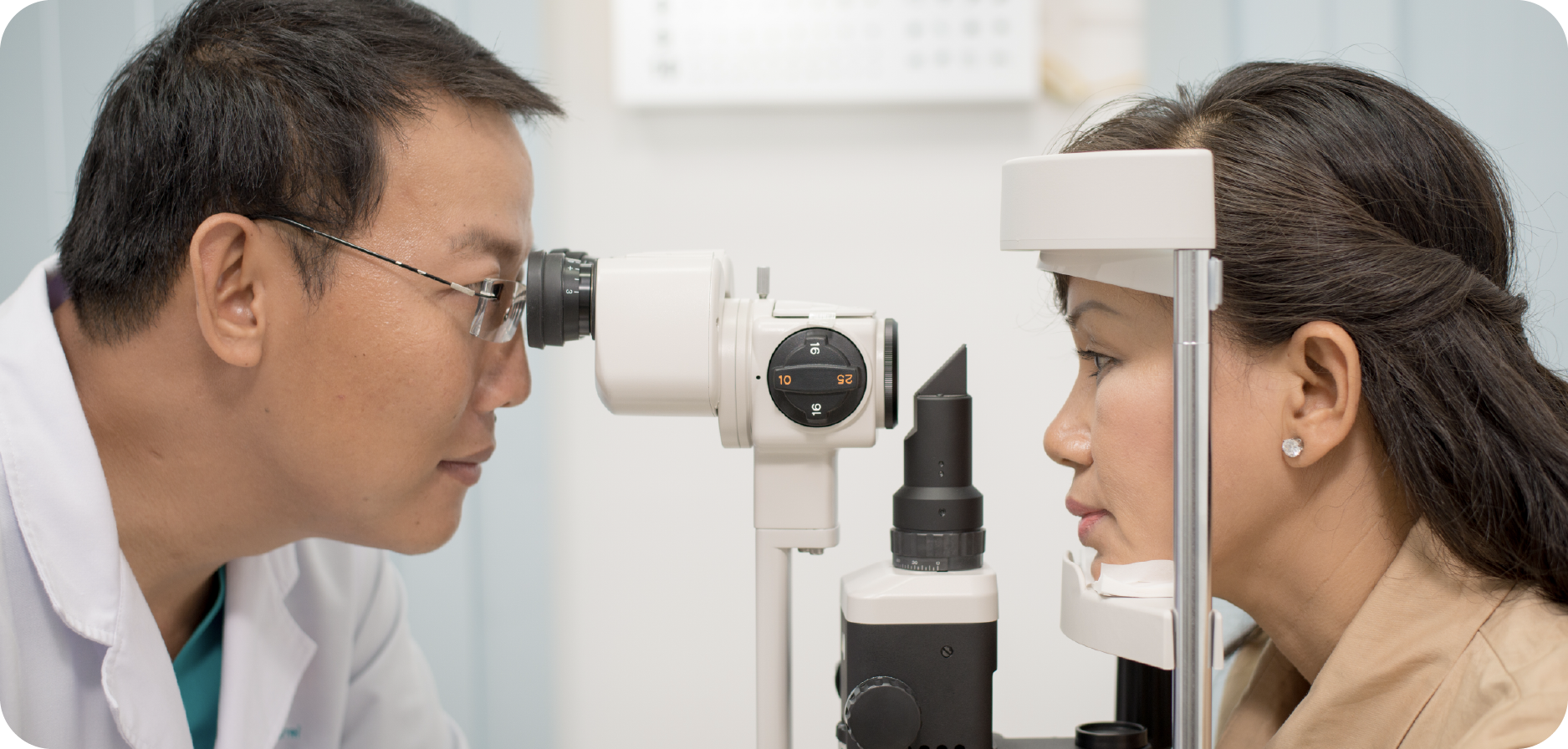
Good eyesight is one of the things people may take for granted until problems arise. This can lead to people frequently postponing eye examinations that should be regular.
Eye checkups are important because they allow us to detect issues early on with our eyes. Many eye conditions become progressively more difficult to treat the longer they are allowed to develop. Some may even cause irreversible vision loss.
Even if you have no discernible symptoms, an eye checkup in Singapore is still of use. This is because a fair number of eye diseases are nearly asymptomatic in their early stages.
Examples include diabetic retinopathy, glaucoma, and cataracts. By following a regular eye examination schedule, you have a better chance of noticing and managing these early as well as maintaining optimal vision and health.
Regular eye check-ups are instrumental in the long-term preservation of sight. They are an indispensable component of preventive healthcare in Singapore.
Many serious eye diseases can be effectively slowed or treated when detected early. This can save the patient from untreatable vision loss, simply through early treatment or management.

Conditions like glaucoma and diabetic retinopathy can develop with minimal to no symptoms in the initial phases. Left to progress, they may cause irreversible damage to the eye.
The prevalence of diabetes in Singapore (1 in 9 residents aged 18 to 69) increases the risk of diabetic retinopathy in particular. It makes annual eye examination in Singapore a health priority at the national level.
The eyes also often reflect broader systemic health changes. Retinal blood vessels can indicate conditions like hypertension, diabetes, or cardiovascular disease. This makes data gleaned during eye exams valuable in gauging a patient’s overall health.
Vision clarity alone is not a reliable sign of healthy eyes. As noted earlier, some conditions can progress imperceptibly in their earlier stages. You may already have them even though your vision seems perfect.
Proactive screening prioritises prevention over correction and can lead to better outcomes by addressing issues before they develop enough to require advanced treatments.
Singapore’s high-stress urban lifestyle, paired with high digital integration, contributes to eye strain and early ageing of the eye’s lens. It is also notable that Singapore has one of the highest myopia rates in the world.
In addition to that, Singapore’s ageing population sees a fair number of cataract and glaucoma cases. All of this renders periodic eye monitoring essential to the management of disease progression.
A comprehensive eye examination in Singapore usually involves several steps that take 30 to 60 minutes. Generally, they are non-invasive and painless.

The examination begins with a medical history review. This is where the doctor discusses lifestyle habits, current medications, and any family history of eye conditions that can influence vision.
This is often followed by a visual acuity test. This is the standard eye chart assessment that assesses how clearly a person can see at different distances.
The doctor may also perform refraction assessment, which can identify refractive errors like short-sightedness (myopia) or long-sightedness (hyperopia). The same test can identify if corrective lenses are required by the patient.
The doctor will use a slit lamp examination, where a low-powered microscope and bright light are used to inspect the front structures of the eye. This means the doctor will evaluate the cornea, lens, and iris of the eye for possible abnormalities.
After that, eye pressure measurement or tonometry may be performed. This can check for elevated intraocular pressure or IOP, which is a common indication of glaucoma.
Advanced imaging tests may also be used to provide high-resolution scans that offer detailed, non-invasive assessments of the eye and optic nerve. Examples of such tests are Optical Coherence Tomography (OCT) and fundus photography.
Pupil dilation may be achieved with eye drops so that the doctor can get a more detailed view of the retina and optic nerve at the back of the eye.
This step is often performed to detect early signs of diabetic eye disease, age-related macular degeneration, or retinal tearing. The drops used for this may temporarily blur the patient’s vision and cause light sensitivity for around 4-6 hours, so driving after the test is not advised.
The recommended frequency for eye examination in Singapore depends on a number of things: age, existing health conditions, and risk factors.
Regular screening intervals are set to maximise the chances of early detection for age-related or condition-specific diseases.

Those with chronic systemic health conditions often have to get a more rigorous screening schedule. This is because a lot of systemic health conditions lead to increased ocular risk.
Diabetics, even those with stable vision, are advised to undergo dilated retinal examination at least once a year. Diabetic retinopathy can be asymptomatic in its earlier stages, after all.
Those with hypertension or autoimmune diseases should also have regular screening. This can help them monitor for vascular or inflammatory changes in the eyes.
Those taking prescription medication with potential ocular side effects (like certain steroids or hydroxychloroquine) are also advised to get a period review with a specialist to monitor for drug-related eye toxicity.

While scheduled screenings are vital, some symptoms merit immediate attention. See an eye doctor as soon as possible if you experience any of these red flags:
Book an eye screening promptly if any of these occur, rather than self-medicating with over-the-counter eye drops. They may be an indication of a grave condition.
If you need eye care, our team at ERS Suntec City can provide complete eye examination for adults, seniors, and children.
Each assessment is performed by qualified ophthalmologists who evaluate both visual function and eye structure. Examinations may include visual testing, intraocular pressure measurement, and retinal imaging as required.
The clinic also offers follow-up care and monitoring plans for patients with chronic conditions such as glaucoma, cataracts, or diabetic eye disease. We also provide continuity of care and patient education, ensuring individuals understand their results and management plan.
Book a consultation with ERS Suntec City’s ophthalmologists for a complete vision and eye health assessment today.