
Last updated on
14 April 2026

As more people learn about LASIK, eye clinics like ours receive increasing numbers of inquiries about the procedure. These range from questions about the level of discomfort it involves to whether it is normal to experience dry eye symptoms after LASIK.
This article outlines some of the most frequently asked questions about LASIK, with answers from our eye doctors. Those considering the procedure may use these notes as part of their research process.
LASIK eye surgery is generally not painful, as numbing eye drops are applied before the procedure.
Because of these numbing drops, most people experience only mild pressure during the surgery itself. Afterwards, some patients report mild irritation, tearing, or a stinging sensation once the eye drops wear off. These symptoms are usually temporary and often resolve within a few hours.
It is generally uncommon for LASIK to cause permanent vision loss when patients are properly screened. LASIK reshapes the cornea and does not directly affect the retina or optic nerve.
Long-term studies describe LASIK as a generally low-risk procedure for suitable candidates. The US FDA’s PROWL (Patient-Reported Outcomes with LASIK) studies found that up to 5% to 10% of patients reported new visual symptoms such as glare, halos, or dryness after surgery.
A key factor in LASIK safety is patient suitability. Comprehensive pre-surgical screening helps determine whether the procedure is appropriate and low-risk for each individual.

While some patients may feel well enough to travel shortly after LASIK, it is generally advisable to allow at least a day for initial recovery and follow your doctor’s guidance before resuming activities such as long-distance travel or driving.
Regarding flying after LASIK, most surgeons recommend waiting at least 24 to 48 hours before air travel, depending on your recovery and follow-up schedule.
In general, patients are advised to avoid dusty environments and ensure eye protection if travelling soon after the procedure. This is true whether you plan to take a car or plane for your trip.
While enhancements are possible in selected cases, LASIK is generally intended as a one-time procedure. As much as possible, your doctor will attempt to achieve the desired correction during your first treatment.
If something happens to make the outcome sub-optimal, your doctor will evaluate you to see if an enhancement or follow-up procedure is needed. One key consideration before any enhancement is whether there is sufficient remaining corneal thickness to safely perform additional laser treatment.

Most eye specialists recommend postponing LASIK until after pregnancy and breastfeeding. This is because hormonal fluctuations can temporarily change corneal shape and tear stability.
Hormonal changes during pregnancy and breastfeeding can temporarily affect corneal shape and tear stability, which may make surgical outcomes less predictable.
This is a very common question, and misconceptions relating to its answer are common as well.
Cataracts occur in the natural lens of the eye. However, LASIK reshapes the cornea and not the lens.
There is currently no scientific evidence linking LASIK to the development of cataracts. However, individuals who have undergone LASIK can still develop age-related cataracts later in life, as cataracts are a separate condition affecting the natural lens of the eye.

There may be side effects for some patients after LASIK, including temporary dry eye. This commonly occurs because LASIK temporarily affects corneal nerves that help regulate tear production.
For most patients, dry eye symptoms improve within 3 to 6 months as the corneal nerves gradually recover. It may also be managed with lubricants or medicated eye drops in some cases.
Note that patients with pre-existing dry eye have an increased risk of experiencing this side effect.
LASIK is not suitable for everyone for various reasons.
For example, individuals under 18 are generally not eligible because their prescriptions may not yet be stable. This is because the eyes are still developing before the age of 18, making corrective procedures unwise until they have stabilised.
Some people may also be unsuited for it due to their lifestyles. Individuals at higher risk of significant eye trauma, such as certain contact sports athletes or military personnel, may be advised to consider alternatives.
This is because LASIK requires the creation of a flap in the cornea that may be prone to dislodging after eye trauma. In such cases, flapless alternatives like PRK may be considered, as they do not involve creating a corneal flap.
Another common reason for being advised not to pursue LASIK is having thin corneas. Patients with thin corneas may not have sufficient structural thickness to safely undergo LASIK.
Patients should consult a doctor before assuming LASIK is an option for them, as it can have direct bearing on their health and outcomes for procedures.
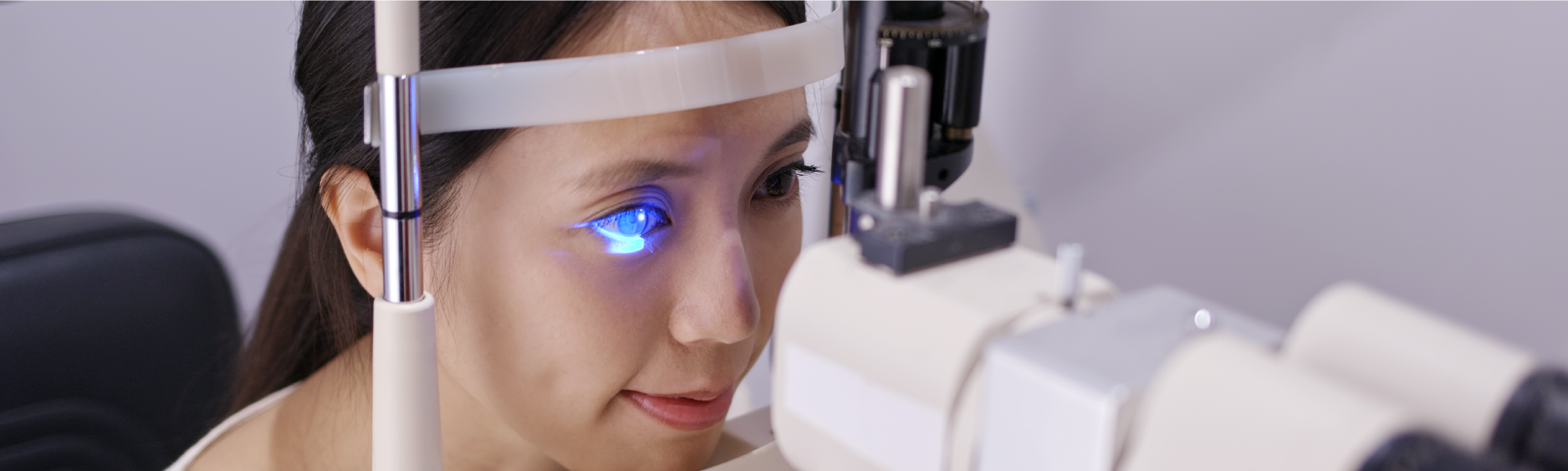
Specialist evaluation is important before deciding on LASIK and determining your suitability.
Book an appointment with our eye specialists at ERS Suntec City for a comprehensive evaluation, so our doctors can determine whether LASIK is suitable for you.